The reason for the hierarchy is to ensure the clients are safe and have the ability to regain their confidence in being mobile. The first, or the bottom of the hierarchy, is bed mobility. It is the most important because if you cannot move in the bed because if you cannot move in the bed, it is going to be very difficult to transfer from a bed to be able to toilet and and get into a wheelchair. Once bed mobility has been sufficiently mastered, you can begin to start working on transfers to a mat. Following mat transfers are wheelchair transfers, bed transfers, functional movement or ambulation for ADLs, toilet and tub transfers, car transfers, functional community mobility and then mobility in the community and driving.
The hierarchy makes sense the way it flows, but honestly I did not originally think about it being this in depth. The reasoning for the hierarchy is so the client can build upon already mastered skills. This makes the client feel comfortable and confident when transitioning to a new skill. Starting a client off automatically trying to be able to move around within their community is not an easy task; therefor, you begin at the bottom and work your way up to a skill that requires several things going on at once. I did see this when I was observing occupational therapists before I began school. I worked a lot in a nursing home, and for some clients we went to their rooms because at that time they were not able to transfer to a wheelchair. So, we worked on them being able to move around in the bed and cultivated activities they could do in bed until they have mastered that and were able to get into a wheelchair and go to the gym.
I definitely agree with this approach to transfers. It is like the old saying, "you have to learn to walk before you can run." It is important that clients are confident in themselves after a health incident where they have been set back some. For me personally, I broke my femur and it took me a little bit to be comfortable and confident in my body's ability after that. So this hierarchy of starting with the less difficult tasks and building upon those makes sense to me. The labs and SIMS labs really drove home the feeling and honestly made it more applicable to what we will be dealing with once we start to practice.
Sunday, June 9, 2019

Sunday, June 2, 2019
Assistive Devices
Assistive devices beneficial and extremely important in our field. It is important to make sure these devices, such as walkers, canes and crutches properly fit our clients. It is important to have them properly fit because:
1. When the devices are properly fit to the individual client, it promotes better body mechanics and better mobility while using the device.
2. It prevents further injuries, stress or trauma to the client's body.
A client that is using a device that is not properly fitted to them could possibly lead to a fall which would lead to more problems and issues for the client.
Fitting a client for assistive devices is easy and does not take much time. In order to fit a client for a cane or walker, the OT is going to identify some specific landmarks on the client's body. The handgrips should be at the ulnar styloid, wrist crease or greater trochanter. It is also important to note that the clients elbows and shoulders should be relaxed. For a platform walker, the client is positioned where the elbow is bent 90 degrees while standing upright. To avoid any nerve compression, the proximal ulna should be between 1-2 inches off the platform. The handle of the platform should also be fixed slightly medial to allow for grip.
For crutches, the landmarks that should be used to fit the device are the same for the cane and walker. However, for axillary crutches, the arm rest should be about 5cm below the axilla with the client's shoulders relaxed. For forearm crutches, the arm band should be positioned approximately 2/3 of the way up the forearm with the handgrips facing forward.
1. When the devices are properly fit to the individual client, it promotes better body mechanics and better mobility while using the device.
2. It prevents further injuries, stress or trauma to the client's body.
A client that is using a device that is not properly fitted to them could possibly lead to a fall which would lead to more problems and issues for the client.
Fitting a client for assistive devices is easy and does not take much time. In order to fit a client for a cane or walker, the OT is going to identify some specific landmarks on the client's body. The handgrips should be at the ulnar styloid, wrist crease or greater trochanter. It is also important to note that the clients elbows and shoulders should be relaxed. For a platform walker, the client is positioned where the elbow is bent 90 degrees while standing upright. To avoid any nerve compression, the proximal ulna should be between 1-2 inches off the platform. The handle of the platform should also be fixed slightly medial to allow for grip.
For crutches, the landmarks that should be used to fit the device are the same for the cane and walker. However, for axillary crutches, the arm rest should be about 5cm below the axilla with the client's shoulders relaxed. For forearm crutches, the arm band should be positioned approximately 2/3 of the way up the forearm with the handgrips facing forward.
Wednesday, May 22, 2019
Body Mechanics
Good posture and body mechanics are important for several reasons. It is important to teach good posture to prevent back problems through development and into adulthood. With back pain being one of the most common issues today, teaching good posture can allow people to live healthier and happier without as much pain. Ask anyone with back pain how aggravating it is; by teaching good posture we can improve the quality of life for many individuals. Body mechanics are important to teach to prevent injuries such as strained muscles and disc problems. Teaching people to lift with their legs and not hunch over can prevent many injuries that happen all too often. Teaching proper body mechanics also makes it easier for an individual to get a task done. If we are teaching our clients how to use proper body mechanics to move a large crate, they can get it done easier and without as much as stress on their body rather than them struggle to move it and potentially lead to more issues. Body mechanics make movements more efficient. Lastly, body mechanics are important to teach for the safety of other individuals. For example, if a nurse is having to do a transfer alone, without proper body mechanics and knowledge, he or she may harm or risk harm to their patient. It is safer for everyone, all around, to use proper body mechanics.
An example of how to teach proper body mechanics in an intervention would be to use a stick/pole and place it behind the client where it is in line with their head and back. Then instructing the client to squat and maintain the pole on their back to prevent them from hunching over. This makes the client have to squat with their legs to reach down and pick up something, such as box. An example of teaching proper posture during an intervention would be instructing the client to sit and then showing them where their posture is lacking. In this scenario we will say that they stick their head and neck out forward instead of having it in alignment with the body. Hold a small pillow or towel on the wall behind them and instruct them to slide their head back and hold the towel on the wall. This will make them correct their posture. Also, instruct the client to think about this while driving and to push their head back into the headrest. This will help maintain good posture while driving.
An example of how to teach proper body mechanics in an intervention would be to use a stick/pole and place it behind the client where it is in line with their head and back. Then instructing the client to squat and maintain the pole on their back to prevent them from hunching over. This makes the client have to squat with their legs to reach down and pick up something, such as box. An example of teaching proper posture during an intervention would be instructing the client to sit and then showing them where their posture is lacking. In this scenario we will say that they stick their head and neck out forward instead of having it in alignment with the body. Hold a small pillow or towel on the wall behind them and instruct them to slide their head back and hold the towel on the wall. This will make them correct their posture. Also, instruct the client to think about this while driving and to push their head back into the headrest. This will help maintain good posture while driving.
Saturday, May 4, 2019
Man from the South
In this short story, the better's wife only had 2 fingers left on her hand. She only had her thumb and index finger. While it did not specifically say in the story that the hand with the amputated fingers was her dominant hand, we can assume it was because she instinctively reached out with that hand. An occupation that she would have trouble with due to this would be being able to shave her legs. Because razor handles are smaller and have a thinner handle, with only a thumb and an index finger, she would have difficulty grasping and maneuvering the razor.
A modification that could be used would be having a razor with a built up handle. A thicker handle would make it easier for the wife to use and hold onto. Another option as a modification would be to use an electric razor. Because electric razors have batteries that need to be charged, most all of them are larger anyways. The wife could easily handle this type of razor in order to shave her legs.
A modification that could be used would be having a razor with a built up handle. A thicker handle would make it easier for the wife to use and hold onto. Another option as a modification would be to use an electric razor. Because electric razors have batteries that need to be charged, most all of them are larger anyways. The wife could easily handle this type of razor in order to shave her legs.
Friday, April 19, 2019
Health Promotion and Literacy
I had never heard of the Triple Aim before our lecture yesterday. The Institute for Healthcare Improvement has this initiative to support and promote a better healthcare system. It includes improving the patient experience and quality of care, improving the health of populations and reducing the per capita cost of health care. These are the main focuses of the initiative and I think it is a good way to shed light on an area that desperately needs improvement.
Watching the video yesterday where patients discussed with their medical professionals that they couldn't read and didn't know how to take the medicine and didn't know what they were taking really hit home with me, and in more than one way. I was a member of Pi Beta Phi throughout undergrad and our focus was literacy and promoting it in areas that were filling behind in it. I got to see first hand in our community where children and adults could not read at a high level. Also, I am from a rural town. A lot of the people in my town are just like the patients who were interviewed throughout that video; many of them read on an elementary level and do not understand the medical terms they are told day in and day out. The lady who said she didn't realize that she was signing papers to get a histerectomy broke my heart. I really do not understand how medical professionals didn't speak with her and talk to her about this before the surgery. It is just an eye opening video that shows how we as medical professionals have to be very adamant about making our clients feel comfortable with us that they can let us know when they do not understand anything or are confused. We have to prevent things like that from happening.
Watching the video yesterday where patients discussed with their medical professionals that they couldn't read and didn't know how to take the medicine and didn't know what they were taking really hit home with me, and in more than one way. I was a member of Pi Beta Phi throughout undergrad and our focus was literacy and promoting it in areas that were filling behind in it. I got to see first hand in our community where children and adults could not read at a high level. Also, I am from a rural town. A lot of the people in my town are just like the patients who were interviewed throughout that video; many of them read on an elementary level and do not understand the medical terms they are told day in and day out. The lady who said she didn't realize that she was signing papers to get a histerectomy broke my heart. I really do not understand how medical professionals didn't speak with her and talk to her about this before the surgery. It is just an eye opening video that shows how we as medical professionals have to be very adamant about making our clients feel comfortable with us that they can let us know when they do not understand anything or are confused. We have to prevent things like that from happening.
Sunday, April 14, 2019
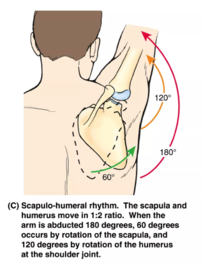
Biomechanics #3
Monday, April 8, 2019
Universal Design
TED talk was really interesting to me. He started off joking because of the female interpreter and really set a light tone to discuss something that is really serious and something that impacts everyone every day, especially as OT practitioners. I really liked how he said that everyone has a disability at some point in their life; whether it be temporary or long term, everyone experiences this at some point. Universal design is a concept that is important for everyone to be included and everyone be able to easily access and experience things. He talked about the automatic door being a universal design. To be completely honest, I had never thought about an automatic door being implemented as something to make it more accessible for everyone. I know I should have recognized this, but I have grown up seeing them everywhere and it never occurred to me that this was designed to be more inclusive.
I listened to the podcast about home health with occupational therapy. It was interesting to me because she was talking about how she was bored in her SNF setting and home health allowed her to use more of her own creativity. She mentioned how she loved being able to actually see the set up of where they are and where they needed help, like with showering. I actually did observation hours in a home health setting, and I was able to go to different client's homes and watch the OT work within the home. I was not a big fan of this setting myself, but it was interesting to listen to her talk about how you could put a bar of soap in a pantyhose leg and tie it to a safety bar so if they drop the soap, they don't have to bend down all the way to get it. It was interesting to see another person's view on this setting and have a positive outlook on it compared to my outlook which was not a very positive one.
I listened to the podcast about home health with occupational therapy. It was interesting to me because she was talking about how she was bored in her SNF setting and home health allowed her to use more of her own creativity. She mentioned how she loved being able to actually see the set up of where they are and where they needed help, like with showering. I actually did observation hours in a home health setting, and I was able to go to different client's homes and watch the OT work within the home. I was not a big fan of this setting myself, but it was interesting to listen to her talk about how you could put a bar of soap in a pantyhose leg and tie it to a safety bar so if they drop the soap, they don't have to bend down all the way to get it. It was interesting to see another person's view on this setting and have a positive outlook on it compared to my outlook which was not a very positive one.
Subscribe to:
Posts (Atom)